Historic mosques in both Guilin and Nanning
Guilin's old mosque on Chongshan Road has served the city's Hui community for centuries, and Nanning Mosque is an active city mosque with halal restaurants around it.
Guangxi is the China of the postcard — green limestone towers rising straight out of the Li River, rice terraces carved into hillsides, and a slow rural pace — plus a Hui Muslim community in Nanning and Guilin that most visitors never think to look for.
Guilin and Yangshuo are the reason people come: a river valley of karst peaks that has been painted for a thousand years, best experienced on a slow cruise from Guilin to Yangshuo and then by bicycle through the villages behind the river. The Longji rice terraces to the north add another two days of genuine countryside.
Nanning, the provincial capital, is a different city — green, subtropical, and home to a Hui community with its own mosque and halal restaurants. It is also the rail hub that connects Guangxi to Vietnam and to Guangdong.
Guangxi has no fixed halal package from us yet, so we build it as a private itinerary. That is genuinely the better option here anyway: the region rewards slowness, and the halal stops work best when we plan them around your exact route rather than a fixed schedule.
The halal guarantee on every Guangxi itinerary: certified halal restaurants only, no pork and no alcohol on the premises, the full list with addresses sent before you fly, and your guide re-checking each booking the day before you eat there.
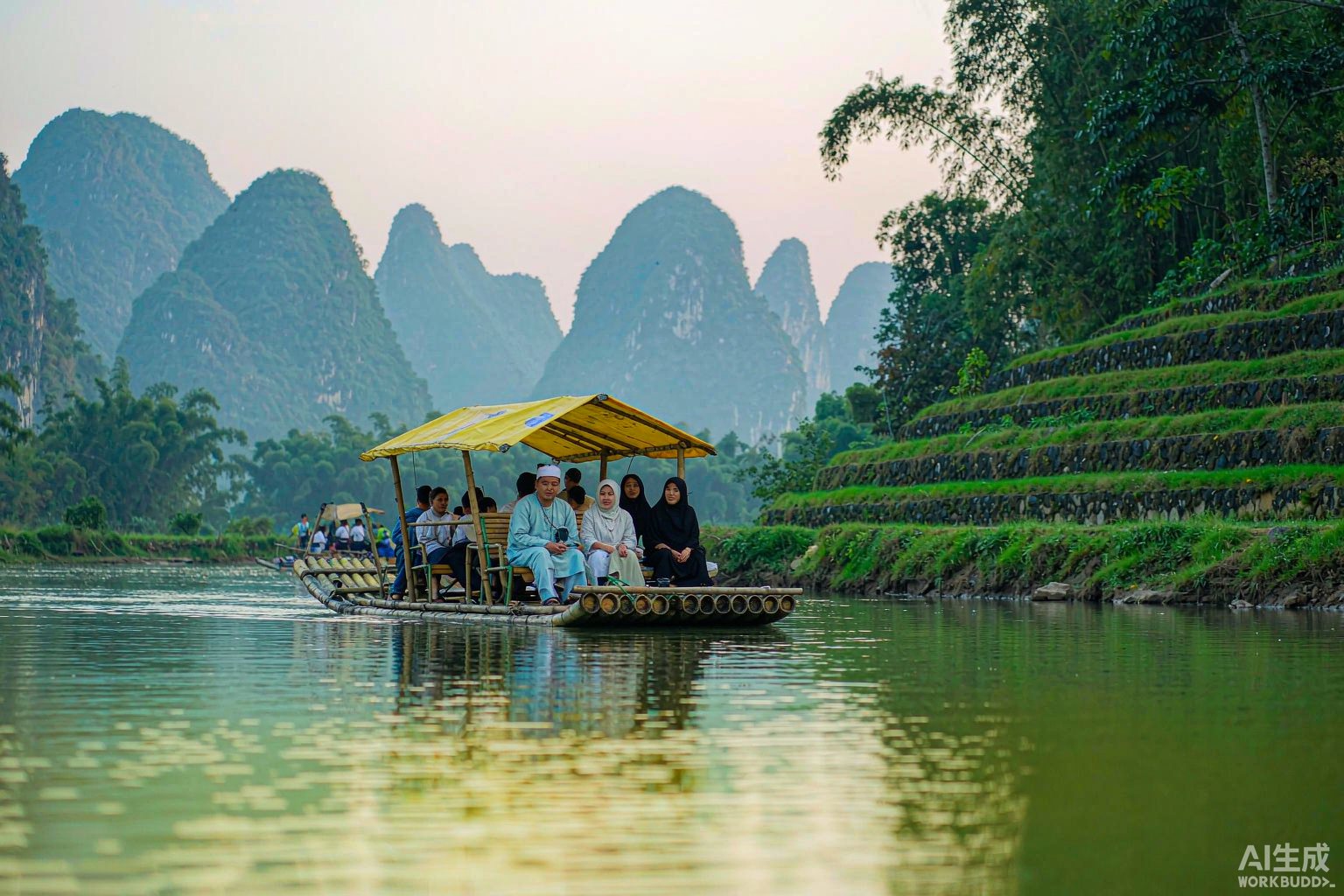
Guilin's old mosque on Chongshan Road has served the city's Hui community for centuries, and Nanning Mosque is an active city mosque with halal restaurants around it.
Guilin's signature noodle dish is beef-based and often halal by default. We point you at the shops that are certified and known to the local community.
The Li River cruise is a four-hour float with no schedule pressure — the easiest travel day in China to keep on time for salah.
Yangshuo and the Longji terraces reward staying still. We deliberately build in unplanned afternoons.
Guilin rice noodles and Nanning laoyou noodles are made by Muslim families and eaten by everybody. Nobody has to explain your order to the kitchen.
The Li river run is short, shaded and easy to break. The raft operators are used to stopping, which makes it the simplest half-day in the province to build around salah.
Six different ways to do Guangxi. Each one has its own page with a day-by-day plan, its own certified halal restaurant list and its own mosque sheet. All six are private departures — no shared coach, no fixed calendar.
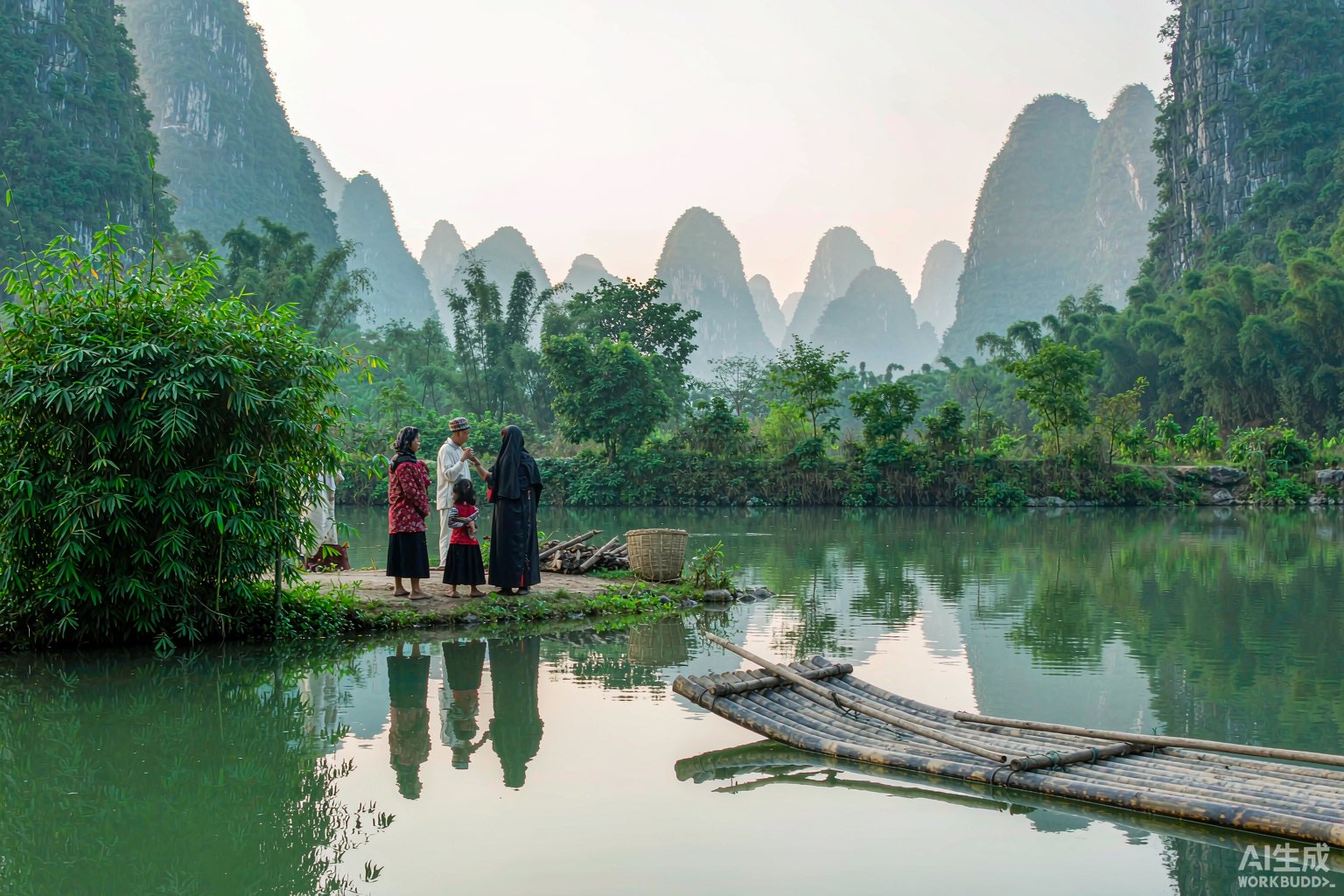 6 daysClassic Highlights
The landscape printed on the twenty-yuan note.
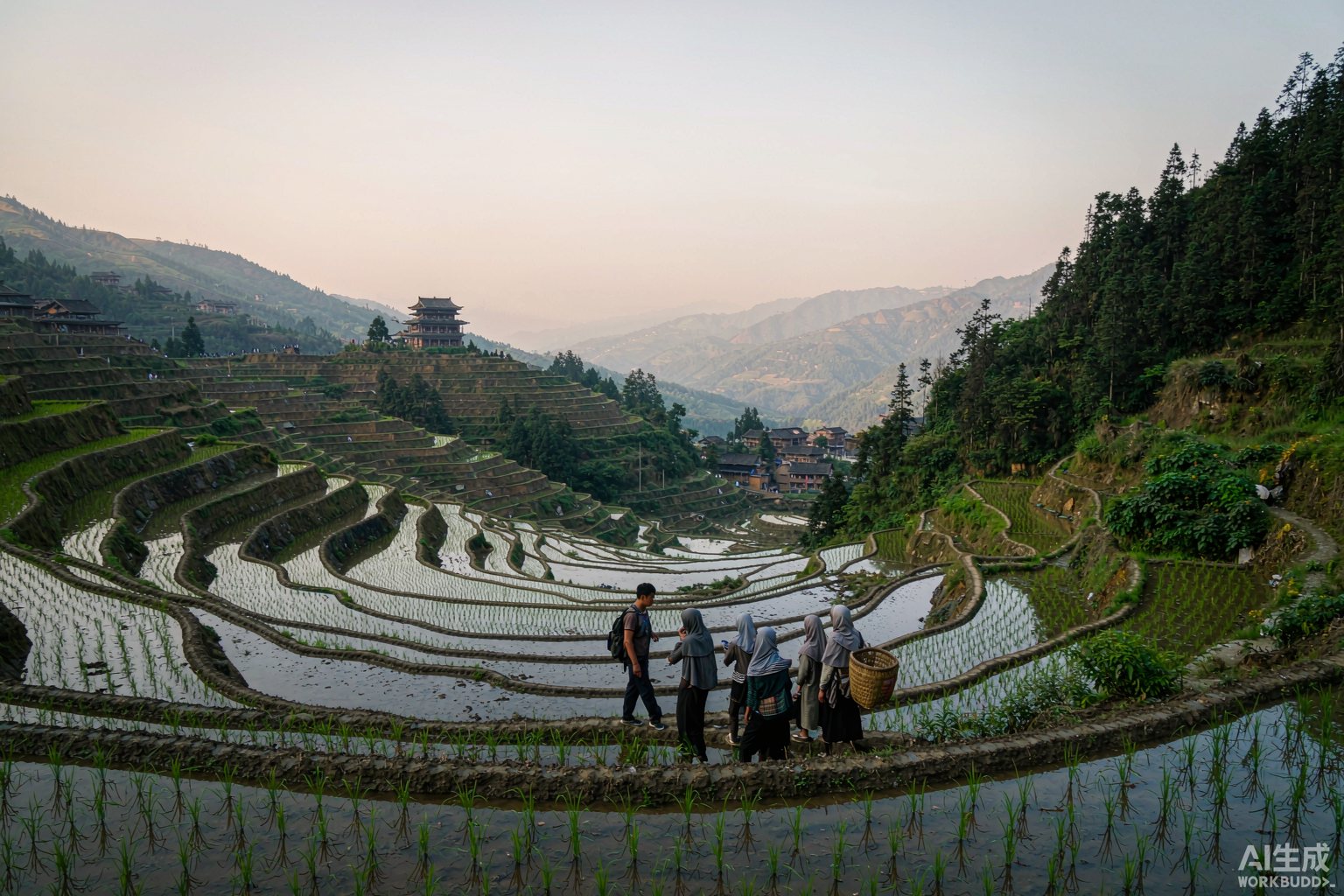 5 daysNature & Highlands
The Dragon Backbone terraces, cut into a mountain by Yao and Zhuang families over six centuries.
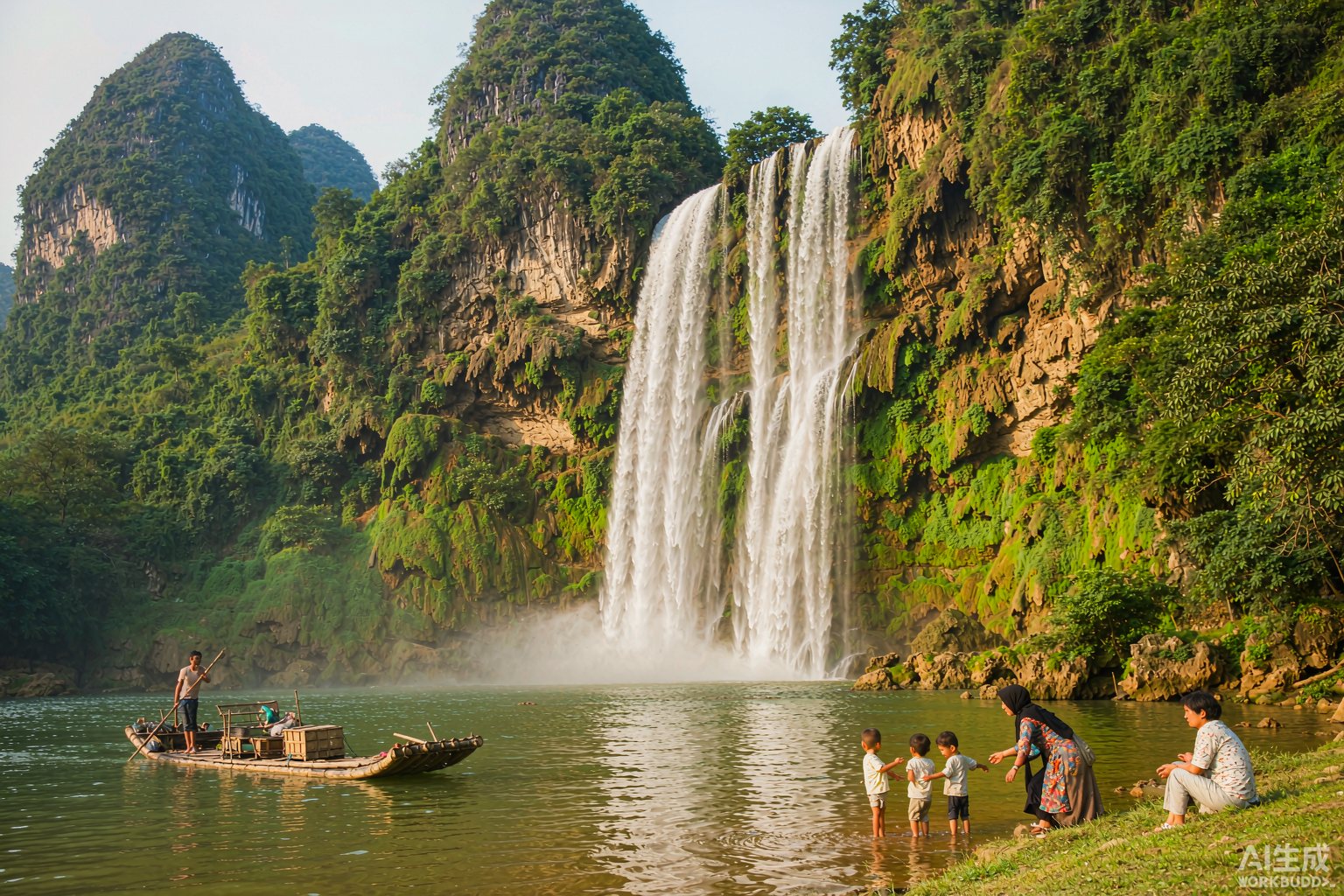 6 daysNature & Highlands
The border country of southwest Guangxi: one of the largest transnational waterfalls in Asia, the karst valley at Ming Shi, and the Tongling gorge.
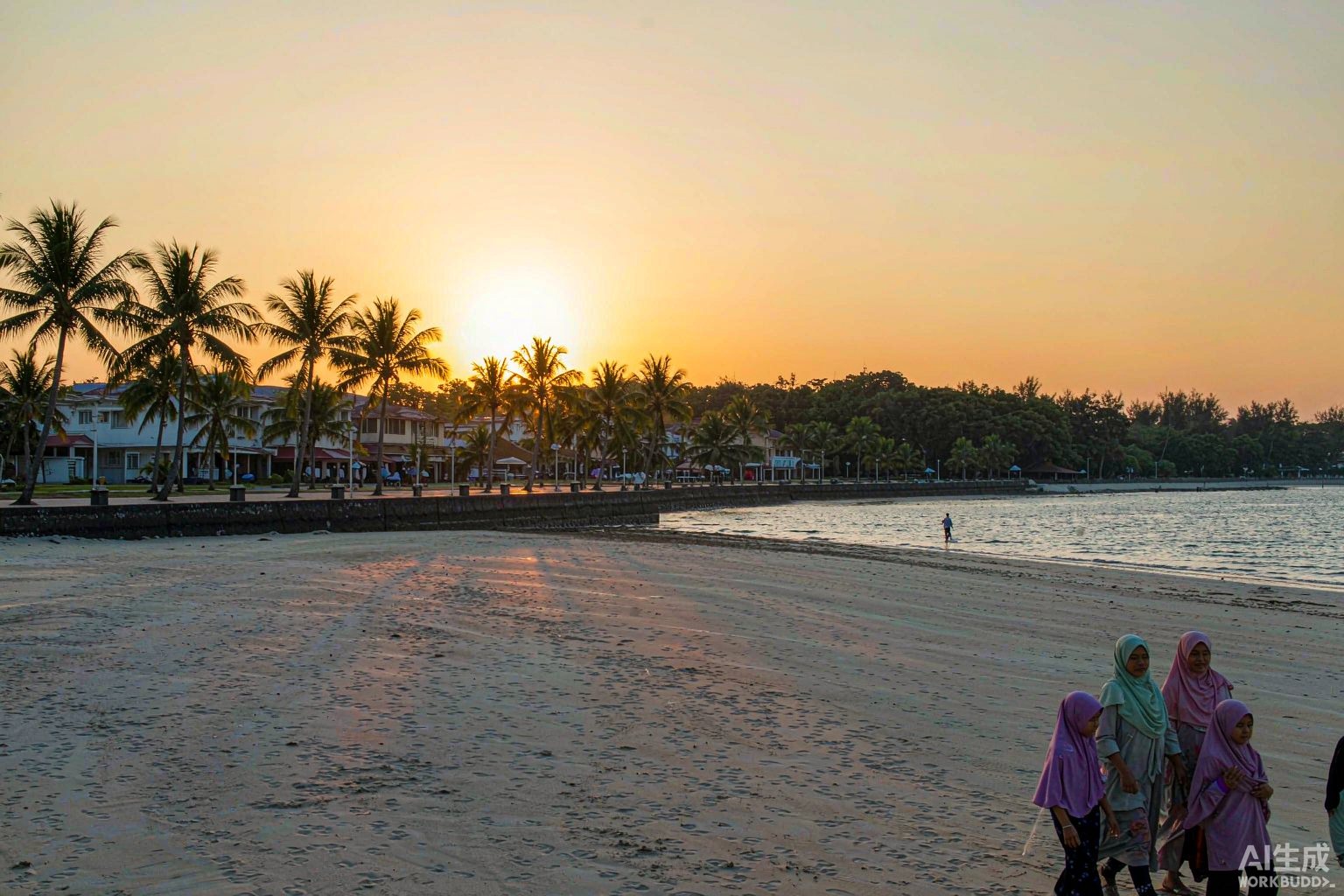 5 daysClassic Highlights
Warm shallow sea, a long sandy beach and a volcanic island two hours offshore.
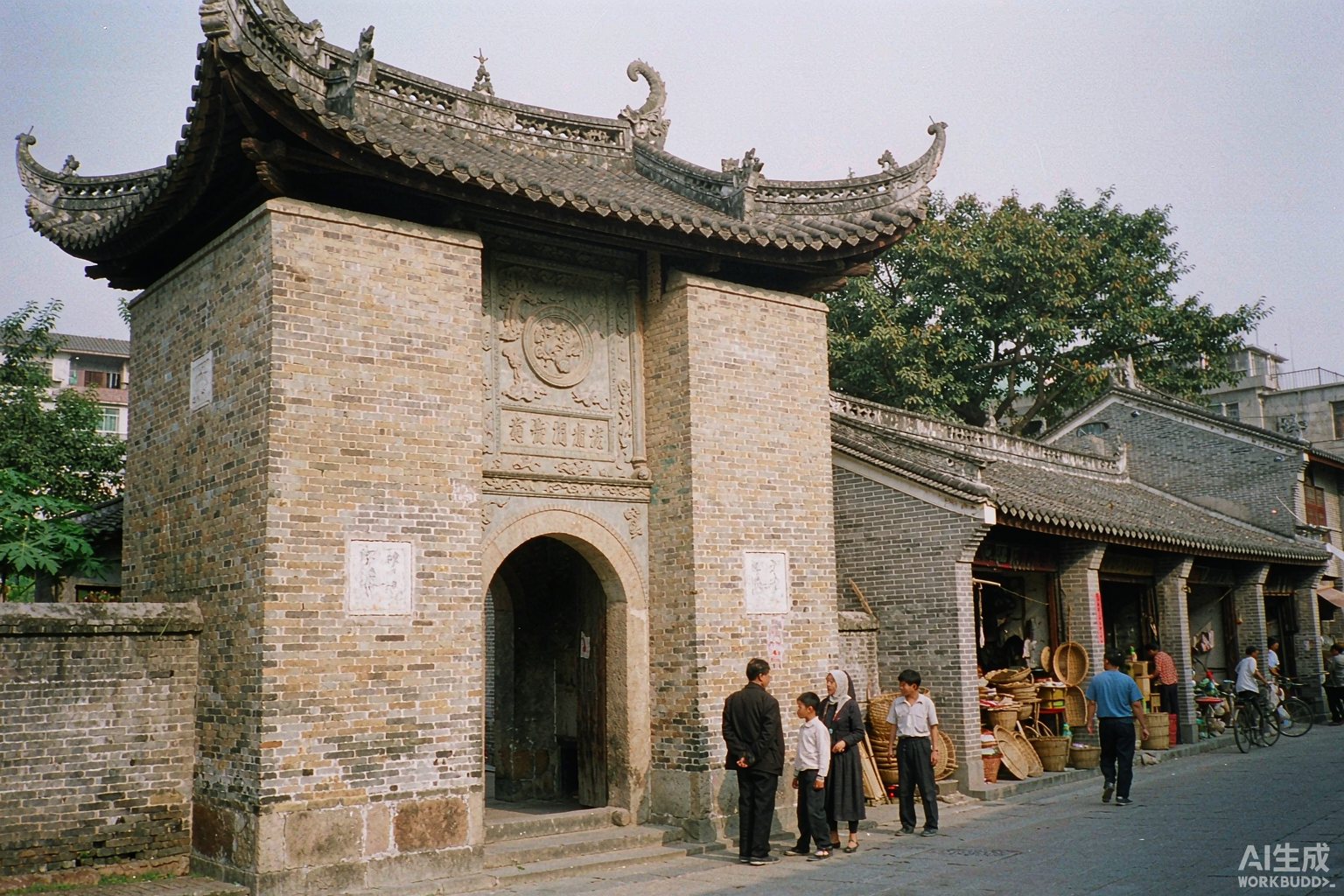 7 daysMuslim Heritage
The Hui communities of southern China, from the Ming-era mosque in Guilin to the halal rice noodle streets around it, with the Zhuang capital of Nanning and a night on the Li river.
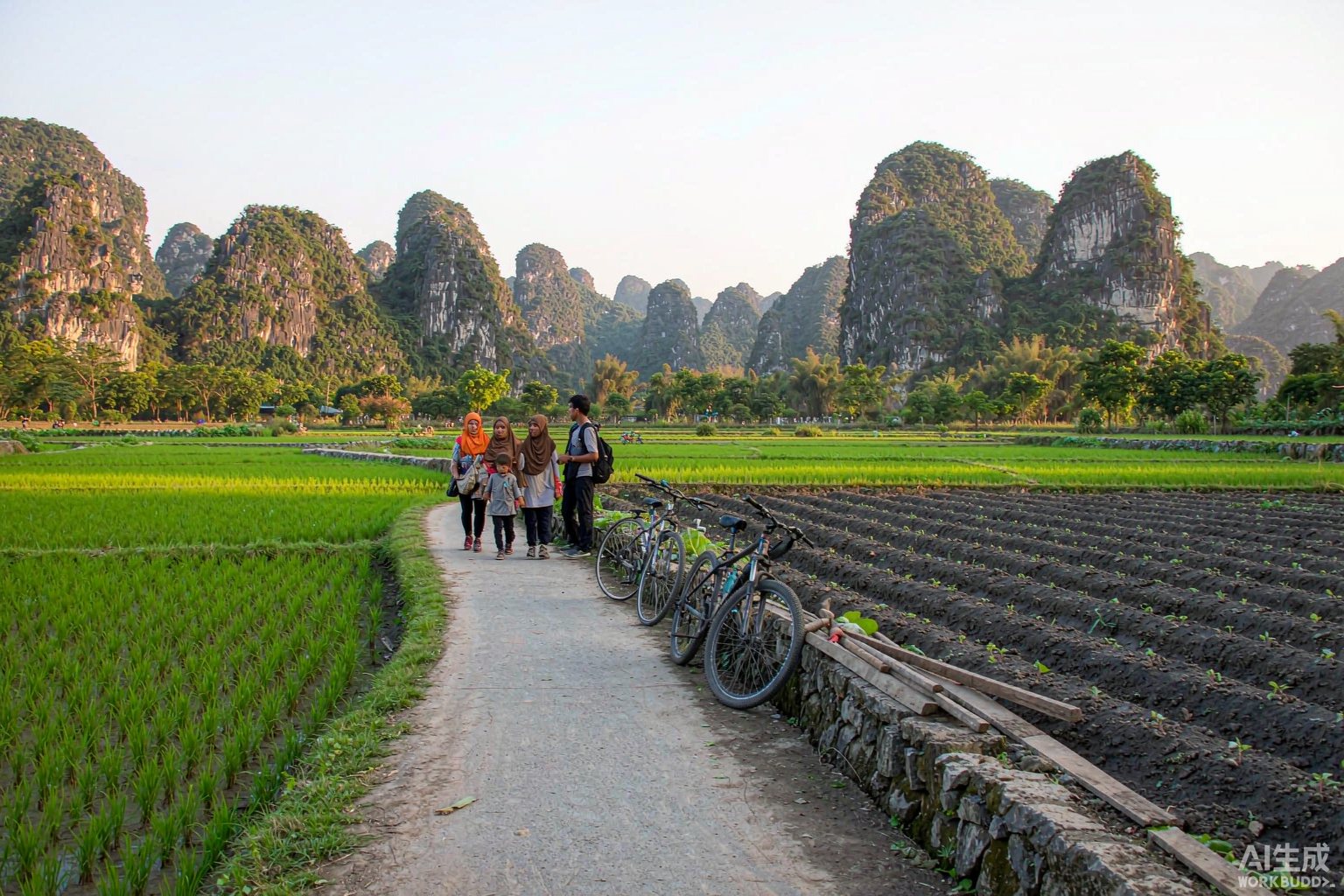 9 daysFamily & Kids
Eight days, four bases, gentle drives.
The six routes above are the ones we build for Guangxi specifically. These are the fixed entries from our main catalogue that also touch it.
6 cities and counties, each one with halal restaurants we have audited, a mosque we have used and a reason to stop.
The karst city: vertical limestone hills inside the city limits, the Li river running south, and one of the oldest Hui communities in southern China in the streets around the old mosque.
The village at the end of the Li river cruise, surrounded by karst towers and rice paddies. Cormorant fishermen, cycling lanes and the most photographed stretch of river in China.
The Dragon Backbone rice terraces, cut into a mountain by Yao and Zhuang families over six centuries, two hours north of Guilin. Wooden stilt villages, and the water-filled terraces reflecting the sky in spring.
The provincial capital, green and subtropical, with a Zhuang majority and a small but established Hui community. The gateway for the southern border routes and the Detian falls.
The border country of southwest Guangxi, where the Guichun river drops over Detian, one of the largest transnational waterfalls in Asia, in a landscape of karst and sugarcane.
A Gulf of Tonkin port city with a long sandy beach, an old colonial and merchant quarter, and the ferry pier for Weizhou island. Warm sea, cheap seafood and a slow pace.
Not a list of every mosque — the ones we actually build into itineraries, with women's prayer space and wudhu facilities confirmed.
Guilin, Chongshan Road
The historic mosque of Guilin, serving a Hui community that has been in the city for centuries and remains active today.
Nanning
The principal mosque of the provincial capital, with a halal restaurant quarter within walking distance.
Yangshuo
A small Hui community and halal eateries in Yangshuo town — we confirm current openings before your dates because they do change.
Guilin
The Ming-era mosque sits inside the old street grid, with a halal restaurant row directly outside its gate.
Nanning
The main Hui mosque of the provincial capital: active, central, and with the city's halal food street beside it.
Yangshuo
There is no mosque in the county town centre, so we plan prayer at the hotel on river days and your guide carries a mat and a compass.
Beef broth, pickled beans, peanuts and rice noodles — the city's breakfast, and halal in most of the shops we use.
Sour, spicy and fermented — Nanning's own noodle dish, available in halal versions in the Hui quarter.
Yangshuo's Li River fish, usually cooked with beer. We order the halal version without alcohol and the restaurants we use know us.
Guangxi's sour-and-hot rural cooking — good, cheap and easy to eat halal if your guide orders for you.
Two rice-noodle traditions that Muslim families have run for generations, and that cost about as much as a coffee.
From April the roadside stalls fill with mango, lychee, longan and coconut. Guangxi is close enough to the tropics for fruit to be the highlight of a day.
The classic four-hour float past the karst peaks on the back of the twenty-yuan note.
Bicycle or electric scooter through the villages, with the Yulong River for a slower bamboo raft.
Dragon's Backbone terraces and Zhuang and Yao villages, two hours north of Guilin.
A large limestone cave in Guilin, useful on a rainy day.
Green subtropical capital with a Hui quarter, a mosque and easy onward rail to Vietnam.
A cross-border waterfall on the Vietnamese frontier, if you have the days for it.
A working skeleton, not a fixed package. We rebuild it around your dates, your prayer needs and whoever is travelling with you.
Land at KWL, evening by the Two Rivers and Four Lakes, dinner at a halal beef-noodle house.
Reed Flute Cave, Elephant Trunk Hill, and the old mosque on Chongshan Road.
The four-hour cruise to Yangshuo, afternoon free in the town.
Cycling and the Yulong River; optional cooking class using a halal kitchen.
Drive north for the rice terraces and the Zhuang and Yao villages.
Rail or drive to Nanning for the mosque and the Hui quarter, or fly on to Guangzhou or Kunming.
Liangjiang International — about 2 hours by air from Shanghai or Beijing, with high-speed rail from Guangzhou in about 2.5 hours.
Wuxu International, with rail connections into Vietnam and the rest of Guangxi.
The provincial gateway, with high-speed rail from Guangzhou in about three and a half hours.
Quick flights in, and the ferry pier for Weizhou island is twenty minutes from the terminal.
The line links the three cities we use most, which keeps the driving on this route down to short scenic hops.
First night in Guilin close to the old mosque, so you eat halal and pray within an hour of landing.
April to June and September to November are ideal — warm, green and mostly dry. July and August are hot and wet with occasional typhoon remnants in the far south. The rice terraces are flooded and mirror-like in May and June, and gold at harvest in September and October.
Send your dates and who is travelling. A Muslim advisor replies within one hour during China working hours with a day-by-day halal plan for Guangxi — restaurants, mosques, prayer times, hotels and an itemised price.