Prayer on the Road in China: Times, Mosques, Wudu and Qibla
China has tens of thousands of mosques and one official time zone that stretches across five geographic ones. That combination makes prayer straightforward in the cities — and genuinely confusing in the far west. Here is exactly how we handle the five prayers on the road.
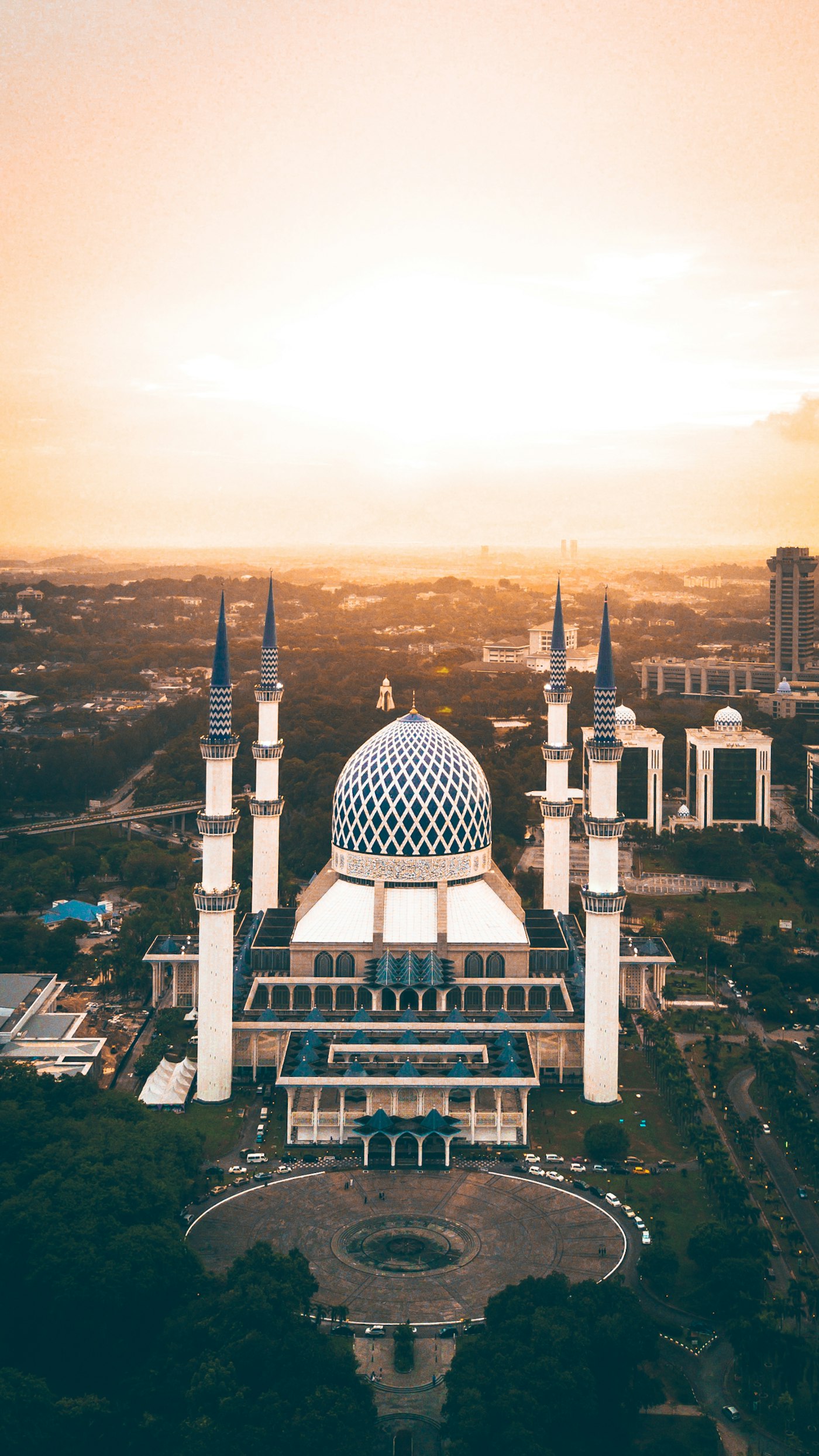
How easy is it to pray in China?
Easier than most first-time visitors expect, and harder than a Muslim-majority country — that is the honest summary. China is home to tens of millions of Muslims and tens of thousands of mosques, and in the cities we operate in the mosque is not a hidden institution, it is a landmark. Dongguan Grand Mosque sits in the centre of Xining. Huajue Lane Great Mosque sits inside the walls of Xi'an. Niujie is a whole district of Beijing. In those cities you can pray all five prayers on foot.
What requires planning is the space between cities. A long drive across Gansu or a morning on the high-speed rail does not come with a mosque at each end automatically, and China's single national time zone makes published timetables unreliable in the west of the country. Both problems are solvable; neither solves itself. That is what this guide is for.
One time zone, five geographies
China officially runs on Beijing Time (UTC+8) from the Pacific coast to the Pamir edge, a spread of roughly five hours of real solar time. The practical consequence: in Kashgar, in the far west, the sun in high summer does not set until close to 10pm Beijing time, and Fajr falls at an hour that looks absurd on a printed national timetable.
Muslim communities in Xinjiang have always handled this by using local solar time — often called Xinjiang Time (UTC+6) — for prayer and for daily life. Many hotels and restaurants there display both clocks. If you arrive in Kashgar and every local Muslim is praying at a different time from your phone app, this is why.
What we do: your guide carries a printed prayer-time sheet calculated for the exact city and the exact dates of your trip, using the calculation method your family follows. We recalculate whenever you cross regions, and we confirm the convention with the local mosque rather than argue with it. Send us your preferred method before you fly and it goes on the sheet.
Finding a mosque in any Chinese city
You will not struggle in the cities on our routes. Beyond the famous ones, the pattern is consistent across China: mosques cluster in the Hui quarter, and the Hui quarter is where the halal restaurants are. Find one and you have found the other.
- Beijing — Niujie Mosque, tenth century, at the heart of the Hui district.
- Xi'an (Shaanxi) — Huajue Lane Great Mosque, inside the Muslim Quarter.
- Xining (Qinghai) — Dongguan Grand Mosque, the largest in the province and walkable from most central hotels.
- Lanzhou (Gansu) — several mosques within the city, the largest near the halal food streets.
- Yinchuan (Ningxia) — Nanguan Grand Mosque, with green domes and twin minarets.
- Kashgar (Xinjiang) — Id Kah Mosque, the largest in China.
- Guangzhou — Huaisheng Mosque, traditionally the oldest in China.
Away from those cities, county towns across Gansu, Qinghai, Ningxia and Xinjiang almost always have a mosque, often a small one on a side street. Your guide knows where; a map app usually does not.
Wudu, toilets and clean water
This is the detail that decides whether a travel day feels calm or stressful, so we plan it rather than improvise. Every vehicle on our tours carries bottled water specifically for wudu — not for drinking. It is restocked each morning and it is in the boot where the guide can reach it without unpacking.
Mosques in China have proper wudu facilities, usually a row of taps at the edge of the courtyard with a covered area and, in the larger mosques, separate facilities for women. Public toilets in Chinese cities are plentiful and free; standards vary, so carry tissues and hand sanitiser, and expect squat toilets outside tourist areas. Service stations on intercity highways are clean and frequent.
For tayammum, a clean surface is never far away, and at altitude we plan prayer stops in the lee of the vehicle — the wind on the plateau is the real enemy, not the cold.
Qibla in hotels, vehicles and the wild
Qibla in China is roughly westward, and the further west you travel the closer it comes to due west. In Xi'an and Beijing it is west-southwest; in Kashgar it is very close to due west. Phone compasses work fine and there is no magnetic anomaly to worry about.
What we add: we check the qibla direction in your hotel room before you arrive. Staff at most Chinese hotels do not know, but they will happily let us check a room at check-in, and we note the direction for each room on each night of the itinerary. A small printed card with the qibla arrow goes into your welcome pack.
In vehicles we do not pray sitting unless the journey genuinely cannot be paused. Our drivers are briefed that prayer stops are part of the schedule, not an interruption to it, and the daily plan leaves slack around Dhuhr and Asr so a stop never feels rushed.
Praying on trains, planes and long drives
China's high-speed rail is fast, smooth and — usefully — has space at the end of each carriage near the doors. Travellers pray there regularly and nobody objects. On a four-hour Beijing–Xi'an run you will comfortably make Dhuhr and Asr on board. Carry a small prayer mat; the floor is clean but it is a floor.
On domestic flights, cabin crew are used to Muslim passengers praying in the galley area or at the rear, and short-haul schedules rarely conflict with more than one prayer. Ask quietly and it is almost always accommodated. For long drives in the northwest we simply build the day around it: a two-hour block, a stop, then another block.
And if a prayer genuinely cannot be performed at its time — a mountain road with nowhere to stop, a delayed departure — you are travelling, and Islam gives you clear concessions. Take them without guilt and make the prayer up when you arrive.
Jumu'ah, Eid and Taraweeh
Friday prayer in China is a serious, well-attended occasion. In Xi'an, Xining, Yinchuan and Kashgar the mosques fill well before the khutbah, and the surrounding streets fill with people. Plan to arrive thirty to forty minutes early, dress well, and expect to be welcomed rather than merely tolerated.
We schedule Jumu'ah as the anchor of the day, not an interruption to it — the morning sightseeing ends near the mosque, the khutbah and prayer happen, lunch follows, and the afternoon is light. Women have sections at all the mosques we use; the larger ones are well maintained and some have separate entrances.
In Ramadan, Taraweeh is held at many mosques in the Muslim districts, particularly in Ningxia and Xinjiang. We confirm locally which mosques are holding it in your dates rather than assuming, and we keep the evening free so you can attend.
How we build a day around the prayers
A standard China tour is designed to beat the crowds: leave at seven, back at seven, lunch whenever. That schedule is wrong for a practising Muslim, so we throw it out and write a different one.
- Fajr — a hotel within walking distance of a mosque wherever possible, so Fajr does not require a car.
- Dhuhr — the morning block ends near a mosque or a halal restaurant with prayer space.
- Asr — the afternoon drive is planned with a stop that has water and a clean, level place to pray.
- Maghrib — never "on the bus". Evening plans start after it.
- Isha — hotels chosen so that Isha is a short walk, not a taxi ride.
What you receive before you fly is a day-by-day plan with the prayer times printed next to each day's movements. If a hotel cannot support that shape, we change the hotel. That is the whole promise, and it is the reason our travellers describe these trips as restful rather than rushed.
Every itinerary we sell comes with a printed prayer-time sheet for your exact cities and dates, hotels checked for qibla before you arrive, a vehicle stocked with water for wudu, and five prayer stops built into each day. Nothing is left to chance and nothing is rushed.