A mosque in Guiyang that predates most of the city
Guiyang Mosque was founded in 1712 and remains the centre of the province's Muslim life. It is modest, central and easy to reach.
Guizhou is the province China forgot to advertise: Asia's largest waterfall, hundreds of Miao and Dong villages with their own dress, music and architecture, and a Guiyang mosque that has been serving the city's Muslims since 1712.
Guiyang, the provincial capital, is a hilly, green city with a Hui community and a mosque founded in the early eighteenth century. It is also the most convenient base for the province: the Huangguoshu waterfall is two hours away and the minority village country of south-east Guizhou starts just beyond that.
The villages are the real reason to come. The Miao and Dong of Guizhou have kept languages, festivals, embroidery and — in the Dong case — some of the most beautiful covered wind-and-rain bridges in Asia. It is genuine, not staged, and in many villages you are still the only foreign visitor of the week.
Guizhou has no fixed halal package from us, so we build it privately. That suits the province: the best days involve detours, mountain roads and unplanned stops, and halal arrangements work best when we plan them around a specific route.
The halal guarantee on every Guizhou itinerary: certified halal restaurants only, no pork and no alcohol on the premises, the full list with addresses sent before you fly, and your guide re-checking each booking the day before you eat there.
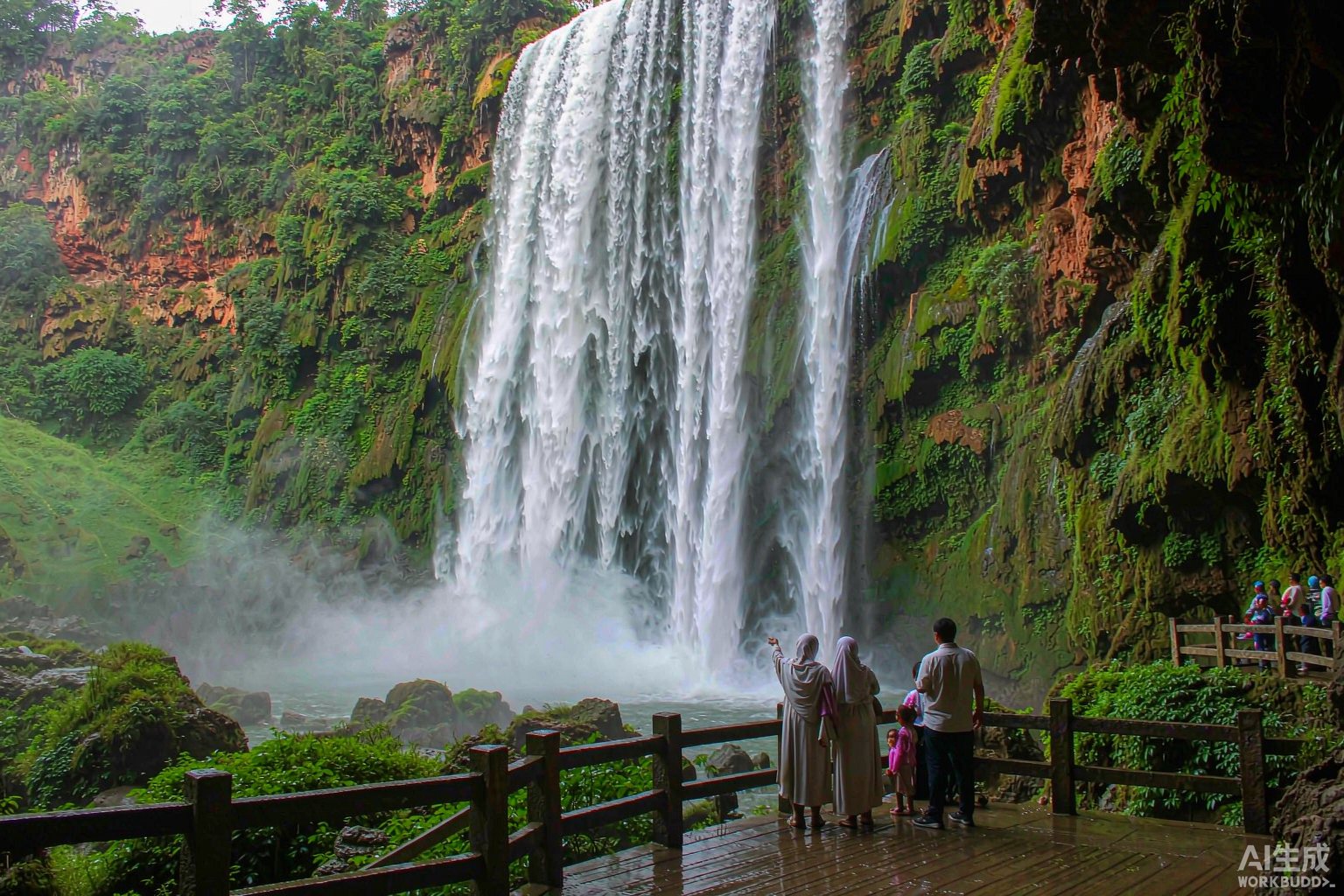
Guiyang Mosque was founded in 1712 and remains the centre of the province's Muslim life. It is modest, central and easy to reach.
Guiyang's beef rice noodles are the local breakfast and are halal in the classic shops. We list the verified ones and show you the character to look for.
Huangguoshu Falls, the Zhaoxing Dong villages and the karst around Anshun need no interpretation — good for a family that wants scenery rather than museums.
Miao embroidery and Dong weaving are living crafts. We visit homes and workshops rather than shows.
Guizhou cooks with sour and hot better than anywhere else in China, and the Hui-run beef kitchens here are fast, cheap and very good.
Guiyang averages around 23C in July. That makes long outdoor days possible in the middle of summer, including while you are fasting.
Six different ways to do Guizhou. Each one has its own page with a day-by-day plan, its own certified halal restaurant list and its own mosque sheet. All six are private departures — no shared coach, no fixed calendar.
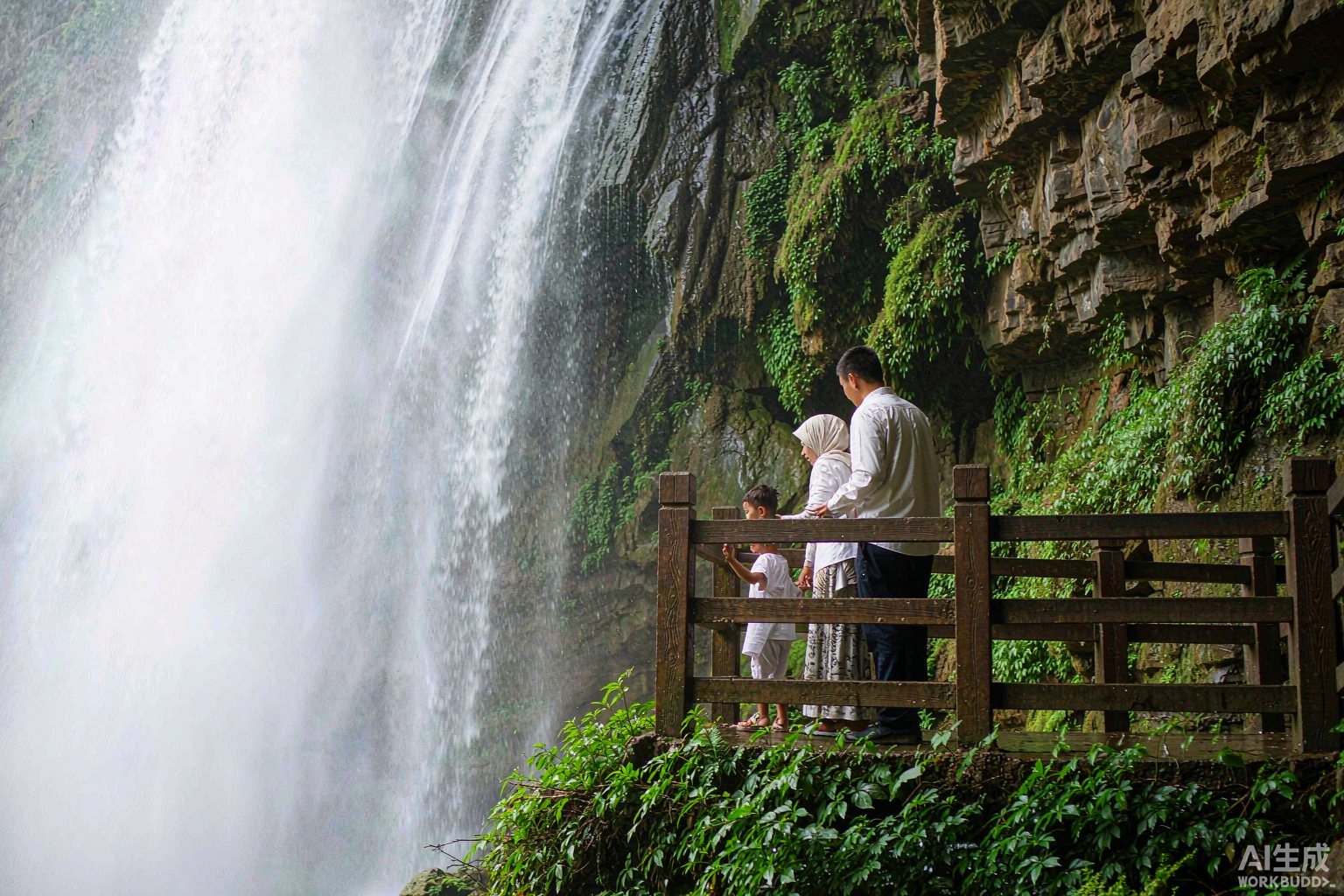 5 daysNature & Highlands
The largest waterfall in China, with a path behind the curtain of water, plus the Dragon Palace river cave and a 600-year-old stone garrison village.
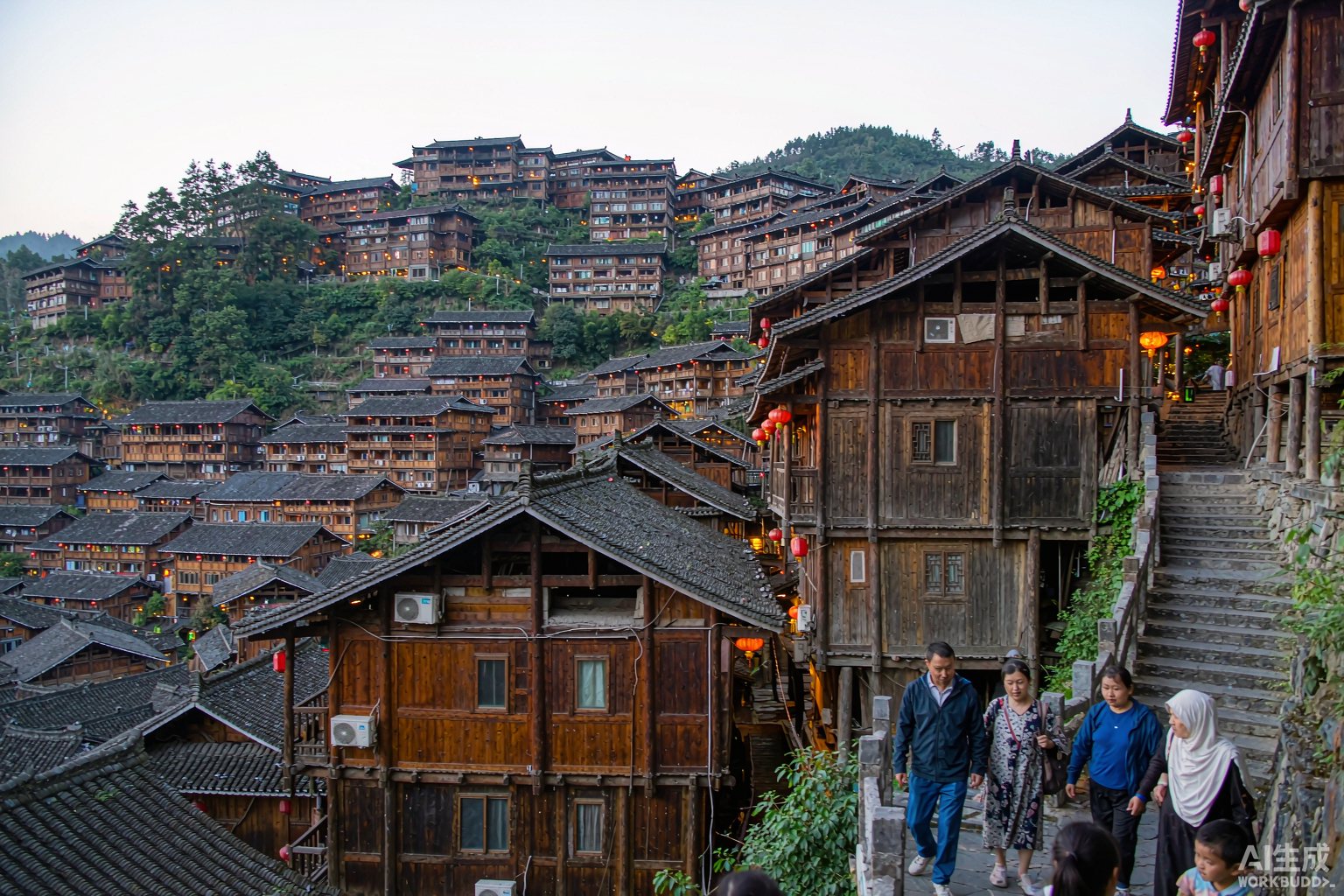 6 daysCulture & Heritage
Silver jewellery, indigo batik and a thousand stilt houses stacked up a valley at Xijiang.
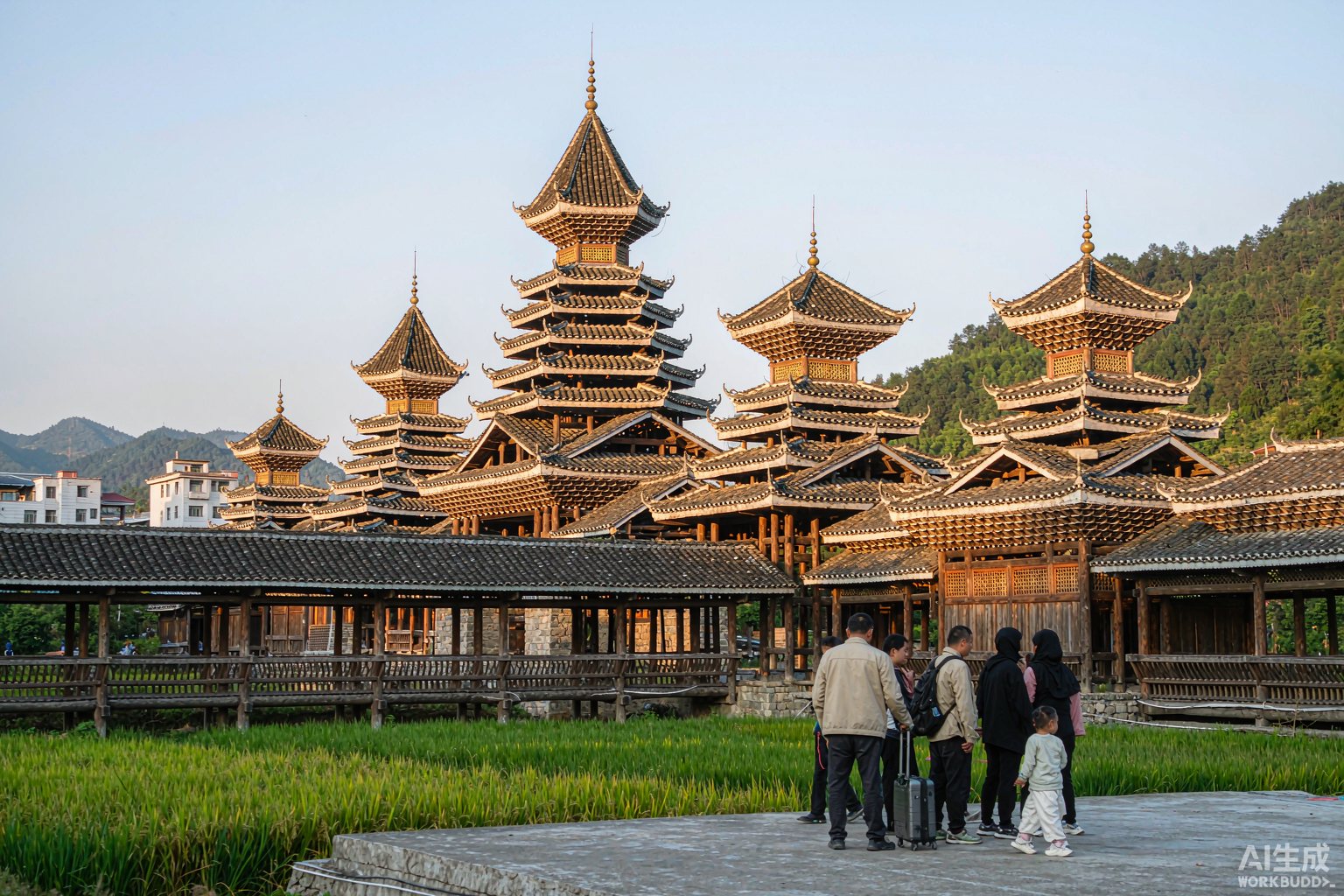 6 daysCulture & Heritage
Five clans, five drum towers, five covered bridges, all built of interlocked pine without a single nail.
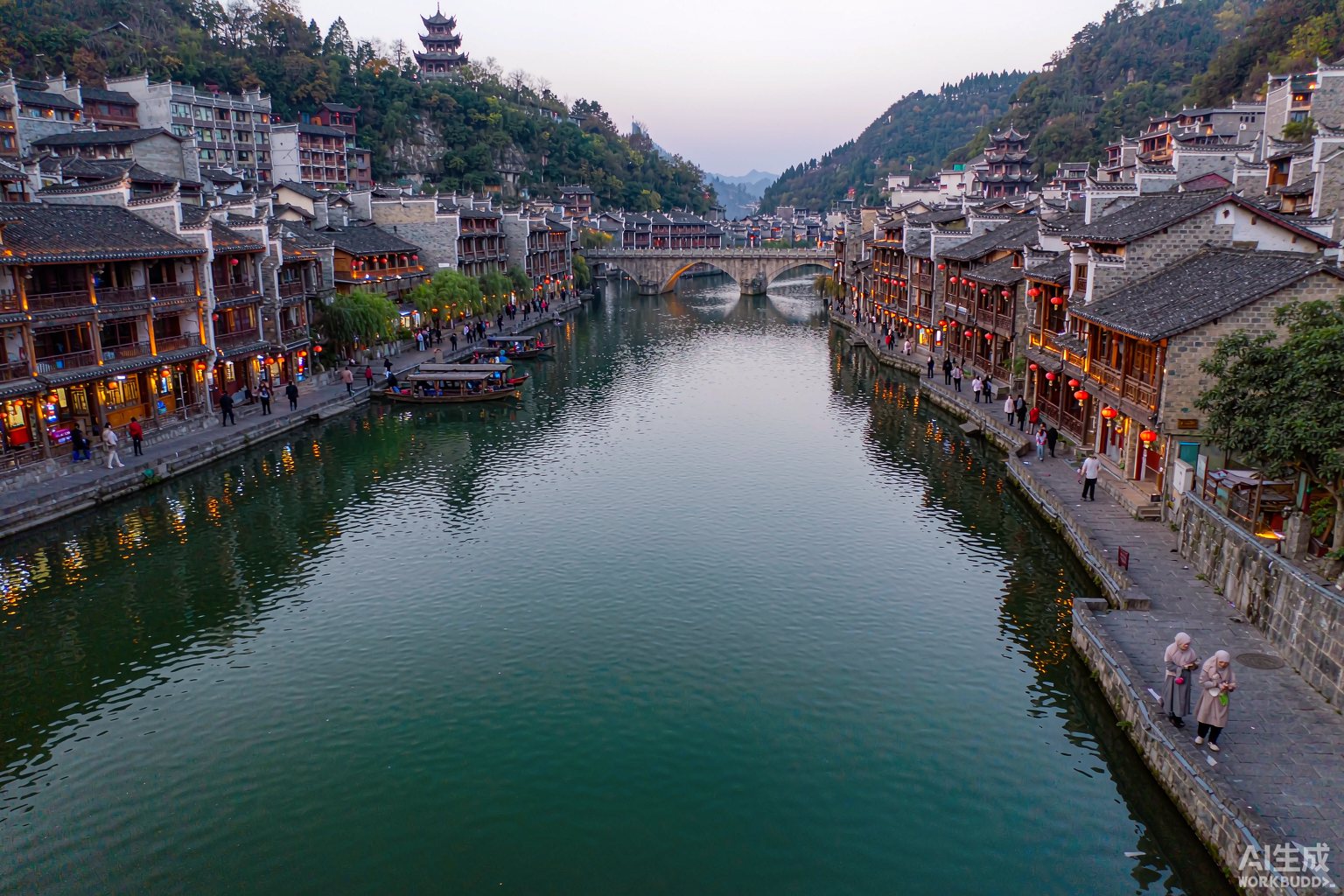 5 daysCulture & Heritage
Ming and Qing houses stacked up both banks of a gorge, with temples bolted onto the cliff face and a boat trip down a river that runs green between them.
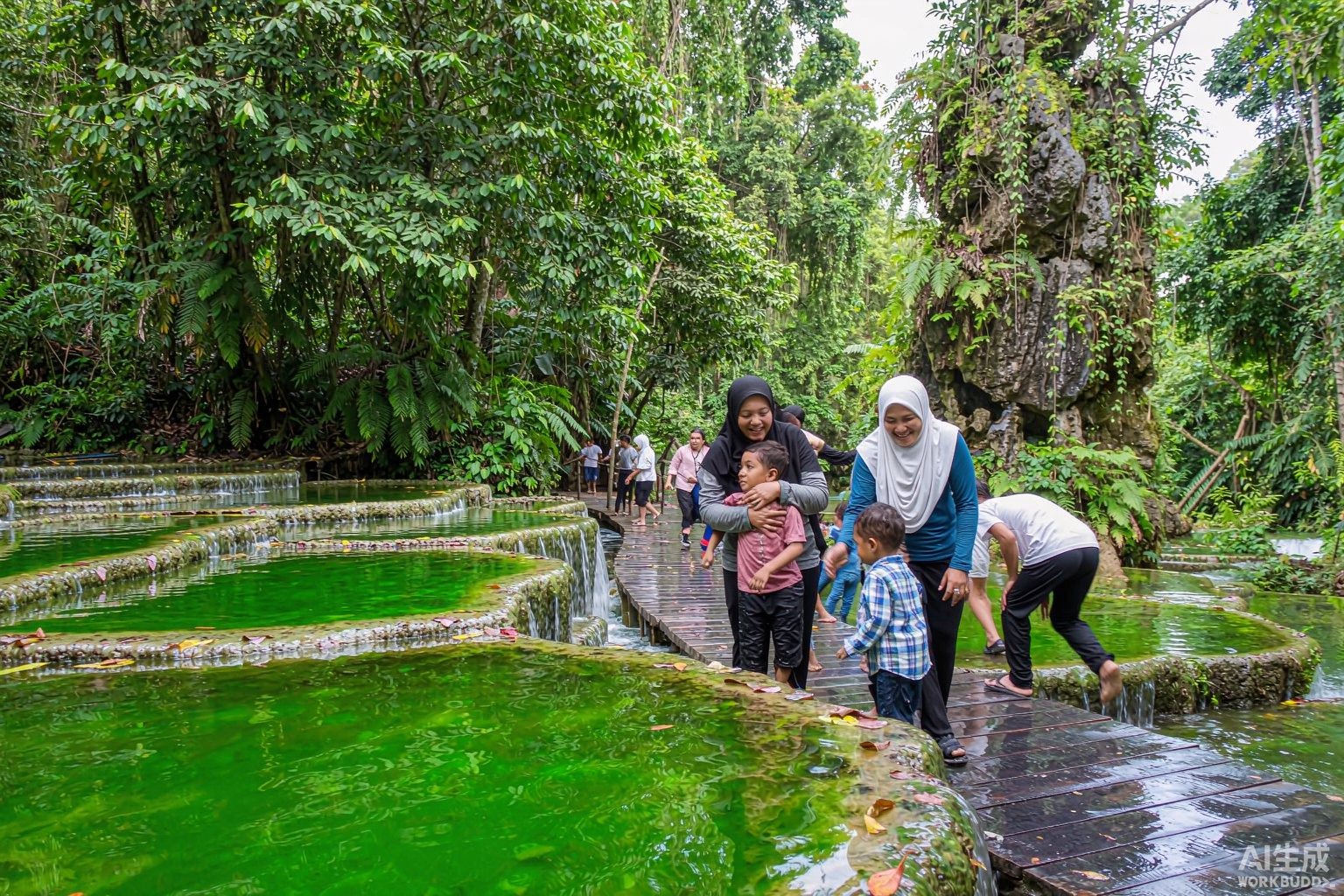 6 daysNature & Highlands
A UNESCO-listed landscape of stepped pools, underground rivers and water the colour of bottle glass.
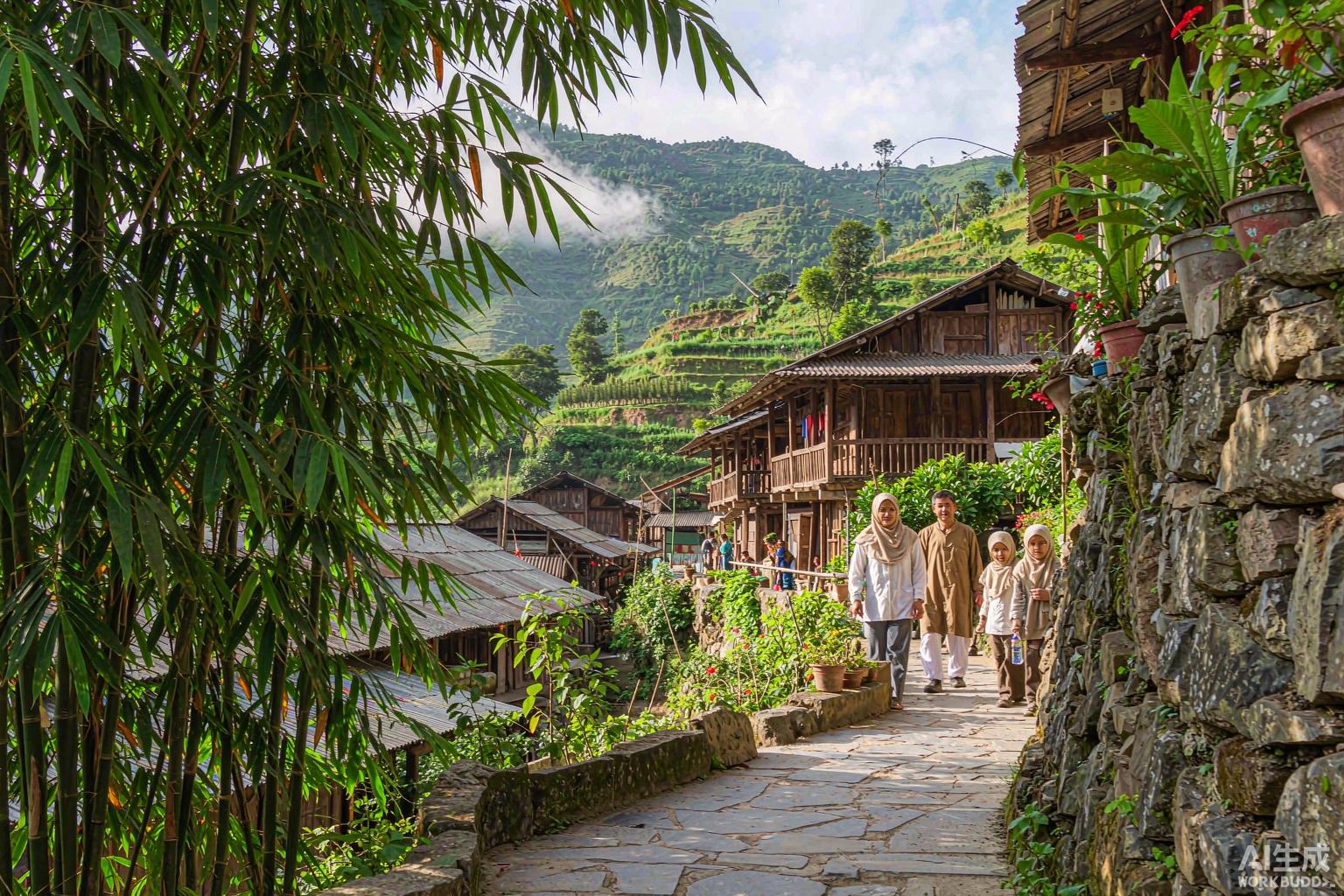 9 daysFamily & Kids
Guizhou is a genuine summer refuge, averaging around 23C in July.
The six routes above are the ones we build for Guizhou specifically. These are the fixed entries from our main catalogue that also touch it.
6 cities and counties, each one with halal restaurants we have audited, a mosque we have used and a reason to stop.
Karst waterfall country two hours west of Guiyang, with the largest waterfall in China and a string of caves and stone villages along the same road.
The capital of Guizhou and one of the coolest summer cities in China, with a Hui quarter around the old mosque and a food culture built on sour and spicy. Every Guizhou route passes through it.
The Miao and Dong heartland of southeast Guizhou. Terraced hillsides, silver jewellery, indigo-dyed cloth, and village festivals that are genuinely part of life rather than staged for visitors.
The Dong village of the drum towers: five clans, five towers, five bridges, in a valley of rice fields and wooden houses. Quieter than Xijiang and architecturally the most remarkable village in Guizhou.
An old town in a limestone gorge on the Wuyang river, with Ming and Qing houses stacked up both banks and a river that runs green between them. One of the most photogenic towns in Guizhou.
The karst green of southern Guizhou, a UNESCO-listed natural site of forest, underground rivers and water the colour of bottle glass. Cool, wet, green and barely visited.
Not a list of every mosque — the ones we actually build into itineraries, with women's prayer space and wudhu facilities confirmed.
Guiyang
Founded in 1712, the oldest and most important mosque in Guizhou, in the city centre and still an active congregation.
Anshun
A smaller Hui community near Huangguoshu with a local mosque, useful for planning prayer around the waterfall day.
Kaili
Gateways into the Miao and Dong village country. Muslim facilities here are limited, so we confirm prayer stops and pack halal meals on these days.
Anshun
Serves the Hui community west of Guiyang and sits conveniently between the city and the Huangguoshu waterfall road.
Kaili
A small mosque in the Miao and Dong heartland. Village nights are planned with a private room and a mat rather than a mosque.
Zunyi
A working mosque on the northern loop. We do not visit distilleries on any route — this is a halal site and that is deliberate.
Clear beef broth, rice noodles, chilli and pickles. The classic Guiyang breakfast, and halal in the shops we use.
Miao-style fish in a fermented tomato and chilli broth. We book kitchens that cook it without pork fat or cooking wine.
Thin rice wrappers you fill yourself with shredded vegetables and a sour dipping sauce — a great, cheap, interactive lunch.
The south-east has its own noodle and smoked-meat tradition, easy to eat halal with your guide ordering.
The signature Guizhou dish, cooked in a tomato and fermented sour broth. We book the Hui-run kitchens that make it properly and without rice wine.
Thin rice sheets you fill yourself with vegetables and a sour dip, plus the beef noodle breakfast the whole city eats standing up.
The largest waterfall in Asia, with the walkway that passes behind the curtain of water.
The largest Dong settlement in China, with its drum towers and wind-and-rain bridges.
A thousand Miao households on a hillside; spectacular at night, busy in the day.
A Ming-era stone town south of Guiyang, useful as a half day.
The 1712 mosque, plus Jiaxiu Pavilion and Guiyang's famously chilli-heavy night food streets.
Longgong cave and the stone forest scenery around Anshun.
A working skeleton, not a fixed package. We rebuild it around your dates, your prayer needs and whoever is travelling with you.
Land at KWE. Guiyang Mosque, Jiaxiu Pavilion, and a chilli-heavy halal dinner.
Drive to Anshun for the waterfall and the walkway behind it, with a prayer stop en route.
Rail or drive to Kaili, then out to a Miao village. Packed halal lunch.
Dong and Miao villages; the drum towers and wind-and-rain bridges of the south-east.
Ming-era town on the way back to Guiyang, evening free.
Add zhaoxing-area village markets, or fly onward to Kunming or Chongqing.
Longdongbao International — about 2 hours 30 from Shanghai or Beijing, with high-speed rail from Guangzhou and Kunming. Connections to Kaili by rail are fast and frequent.
Forty minutes from Guiyang and the closest station to Huangguoshu, which turns the waterfall into a day trip rather than a transfer.
Small and seasonal, but it saves a four-hour drive if the karst south is on your list.
Forty minutes from Guiyang, and the door to the Miao and Dong villages.
About five hours, which makes Guizhou an easy add-on to a Guangdong or Guangxi trip.
First night in Guiyang near the mosque, then out to the villages the next morning before the day-trippers arrive.
March to May and September to November are the best windows — mild, green and clear. Summer is cool by Chinese standards but wet, with heavy rain and occasional flooding on the mountain roads. Winter is grey and damp. The Miao and Dong festival calendar has major dates in spring and autumn, which we can build a trip around.
Send your dates and who is travelling. A Muslim advisor replies within one hour during China working hours with a day-by-day halal plan for Guizhou — restaurants, mosques, prayer times, hotels and an itemised price.