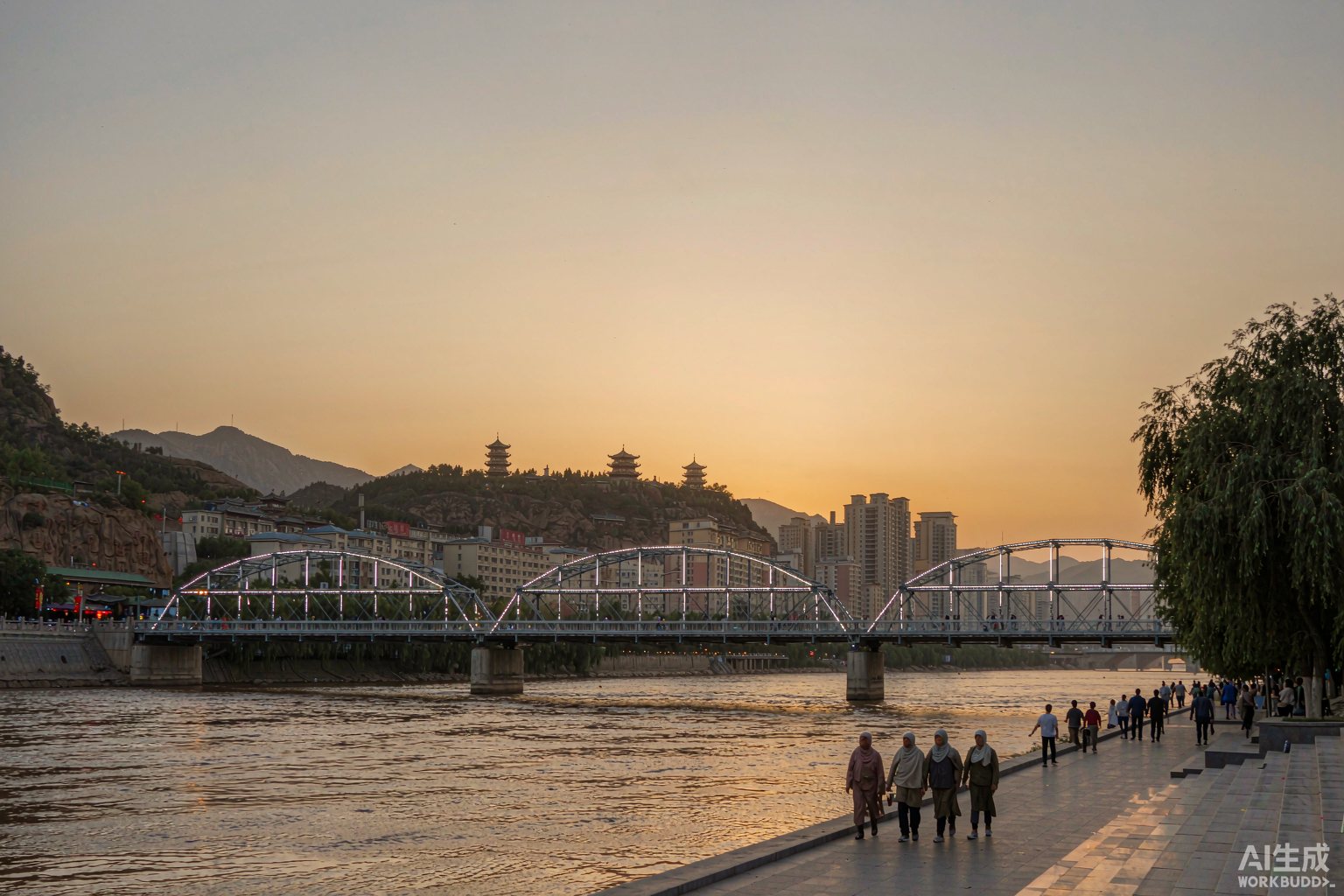
A long, narrow city strung along the Yellow River, and the birthplace of Lanzhou lamian. Hui and Dongxiang Muslims are everywhere in the food culture here, and the riverfront park is where the city walks in the evening.
The most Muslim-dense five days you can spend in China. Lanzhou for the Yellow River waterfront and the lamian shops at dawn, then Linxia, a prefecture where Muslims are the majority and eight grand mosques sit inside one small city.
This is a private departure, not a shared coach. You choose the dates, we rebuild the 5 days around them: Lanzhou, Linxia, in that order, with the halal restaurants and the mosques placed first and the sightseeing fitted around them.
The halal guarantee on this route: every restaurant is a certified halal restaurant with no pork and no alcohol on the premises. We send the full list with addresses before you fly, and your guide re-checks each booking the day before you eat there. Both Xining and Lanzhou have mosques within walking distance of the hotels we book, and Jumu'ah is straightforward in either city. On the Qinghai Lake and Gansu corridor drives we plan the day around a mid-afternoon arrival at a rest stop with a prayer room, or we build in a mosque stop. Your guide carries a prayer mat, a compass and a current prayer-time sheet in the vehicle.

Each one with what you actually see there, what you eat, where you pray and how you arrive.
A long, narrow city strung along the Yellow River, and the birthplace of Lanzhou lamian. Hui and Dongxiang Muslims are everywhere in the food culture here, and the riverfront park is where the city walks in the evening.
Often called the little Mecca of China. A prefecture where Hui, Dongxiang, Salar and Baoan Muslims make up well over half the population, with eight grand mosques inside one small city and a brick-carving tradition that has survived four centuries.
A working skeleton, not a fixed package. We rebuild it around your dates, your prayer needs and whoever is travelling with you.
Lanzhou Zhongchuan (LHW), 70km north with a rail link. High-speed trains from Xian in three hours and from Xining in one. Your Muslim guide meets you at the gate with your name on a board. First stop is a hotel we have placed within walking distance of Lanzhou Xiguan Mosque, so Maghrib is a short walk rather than a negotiation. Dinner is already booked at a halal kitchen we have audited.
The river that made northern China runs right through the middle of town. Take the cable car up to White Pagoda Hill for the whole valley, then cross back on the old iron bridge at dusk.
Leave after Dhuhr and drive out. Two hours by road from Lanzhou, three from Xining. No airport; we drive it as part of a corridor or heritage route. Your guide breaks the drive for salah and for food rather than at a service station of his choosing. You arrive in time for Maghrib at Linxia Old Town Grand Mosque.
A dense grid of Hui courtyard houses and workshop streets. This is where the traditional brick and wood carving Linxia is famous for was made, and where you still find it being made.
A last halal breakfast, then the transfer out. Two hours by road from Lanzhou, three from Xining. We hold the vehicle until your flight is called, and if you are fasting we send a breakfast box the night before.
The river that made northern China runs right through the middle of town. Take the cable car up to White Pagoda Hill for the whole valley, then cross back on the old iron bridge at dusk.
Silk Road galleries, Buddhist sculpture from the Mogao cave system and the famous bronze galloping horse. Free entry, and a quiet indoor hour that fits neatly between Dhuhr and Asr.
A dense grid of Hui courtyard houses and workshop streets. This is where the traditional brick and wood carving Linxia is famous for was made, and where you still find it being made.
Different architectural schools sit within a few streets of each other: Chinese temple-style with curved eaves, and newer domed and minareted buildings. Walking between them is the whole point.
No pork on the premises, no alcohol on the premises, and the full list with addresses in your inbox before you fly.
Salah is placed first and sightseeing is built around it, not the other way round. Your guide carries a mat, a compass and a prayer-time sheet.
No pork on the premises, no alcohol on the premises, and no kitchen that handles both. This is the part we audit in person.
Lanzhou beef lamian for breakfast, hand-grabbed mutton, Dongxiang-style lamb, and sweet fermented barley drinks. The city has one of the densest concentrations of halal kitchens in China. Lanzhou Xiguan Mosque is nearby, so you can pray and eat on the same street.
Dongxiang hand-pulled noodles, whole roasted lamb, mutton and potato stew, and thick Hui flatbread from clay ovens. Every restaurant in the old quarter is halal. Linxia Old Town Grand Mosque is nearby, so you can pray and eat on the same street.
Not a list of every mosque in the province — the ones we actually build into this itinerary, with wudhu and women’s space confirmed.
Lanzhou
Central, active and easy to combine with the riverfront walk. Wudhu facilities on site.
Central mosques with full facilities, and prayer rooms at the main railway station. Your guide keeps a prayer mat and a compass in the vehicle for the corridor drives.
Linxia
Active, welcoming, and the natural place to pray Jumuah if your dates put you here on a Friday.
Nothing to arrange. This is one of the most Muslim-dense places in China and your guide will simply walk you to the nearest mosque at the right time.
Lanzhou Zhongchuan (LHW), 70km north with a rail link. High-speed trains from Xian in three hours and from Xining in one.
Two hours by road from Lanzhou, three from Xining. No airport; we drive it as part of a corridor or heritage route.
April to October. Winters are dry and cold but the city works fine year-round.
May to October. Spring and autumn are mild; the loess hills are brown in winter and green from June.
May to early October is the comfortable window; late June to August is warmest at altitude and busiest at Qinghai Lake. Winter is dry and very cold but perfectly workable and much quieter, and the mosques are at their most peaceful.
Send us your dates and who is travelling. A Muslim advisor replies within one hour during China working hours with a day-by-day halal plan for this route — restaurants, mosques, prayer times, hotels and an itemised price.